Megève · France
The Village That Never Forgot Itself
45° 51' 47" N·6° 37' 11" E
It feels like a village first. A ski resort second. That simple distinction explains almost everything about Megève.

The first thing you notice in Megève is not the skiing. It is the sound of horses. Long before the lifts begin carrying skiers into the surrounding mountains, the village square is already alive with the quiet rhythm of daily life. Horse-drawn carriages clip across cobbled streets polished by centuries of winter, their wheels tracing familiar routes between cafés where locals linger over coffee rather than rushing for the first lift. The scent of woodsmoke hangs gently in the cold morning air, church bells drift across slate rooftops, and beneath the towering plane trees that dominate the Place de l'Église, shopkeepers raise their shutters much as they have done for generations.
It feels like a village first. A ski resort second. That simple distinction explains almost everything about Megève.
Many of the Alps' great destinations were transformed by skiing. Some barely existed before lifts arrived, while others expanded so rapidly that their original identities became almost impossible to recognise. Megève chose a different path. It embraced winter tourism without allowing it to redefine the place. The village that welcomes visitors today remains recognisably the same community that has occupied this corner of Haute-Savoie for centuries, evolving carefully rather than dramatically, adding sophistication without sacrificing authenticity. It is this balance that has long distinguished Megève from almost every other luxury resort in Europe.
Ironically, modern Megève owes much of its international reputation to one of Europe's wealthiest families. During the 1920s, the Rothschilds sought an elegant French alternative to St Moritz, then firmly established as the playground of Europe's aristocracy. Their vision was ambitious but unusually sensitive. Rather than constructing a purpose-built resort, they invested in an existing mountain village, encouraging architecture, hospitality and skiing to develop around a community that already possessed its own history and traditions. The decision shaped not only Megève's future but the character of the village itself. Luxury arrived here as an extension of local life rather than a replacement for it.
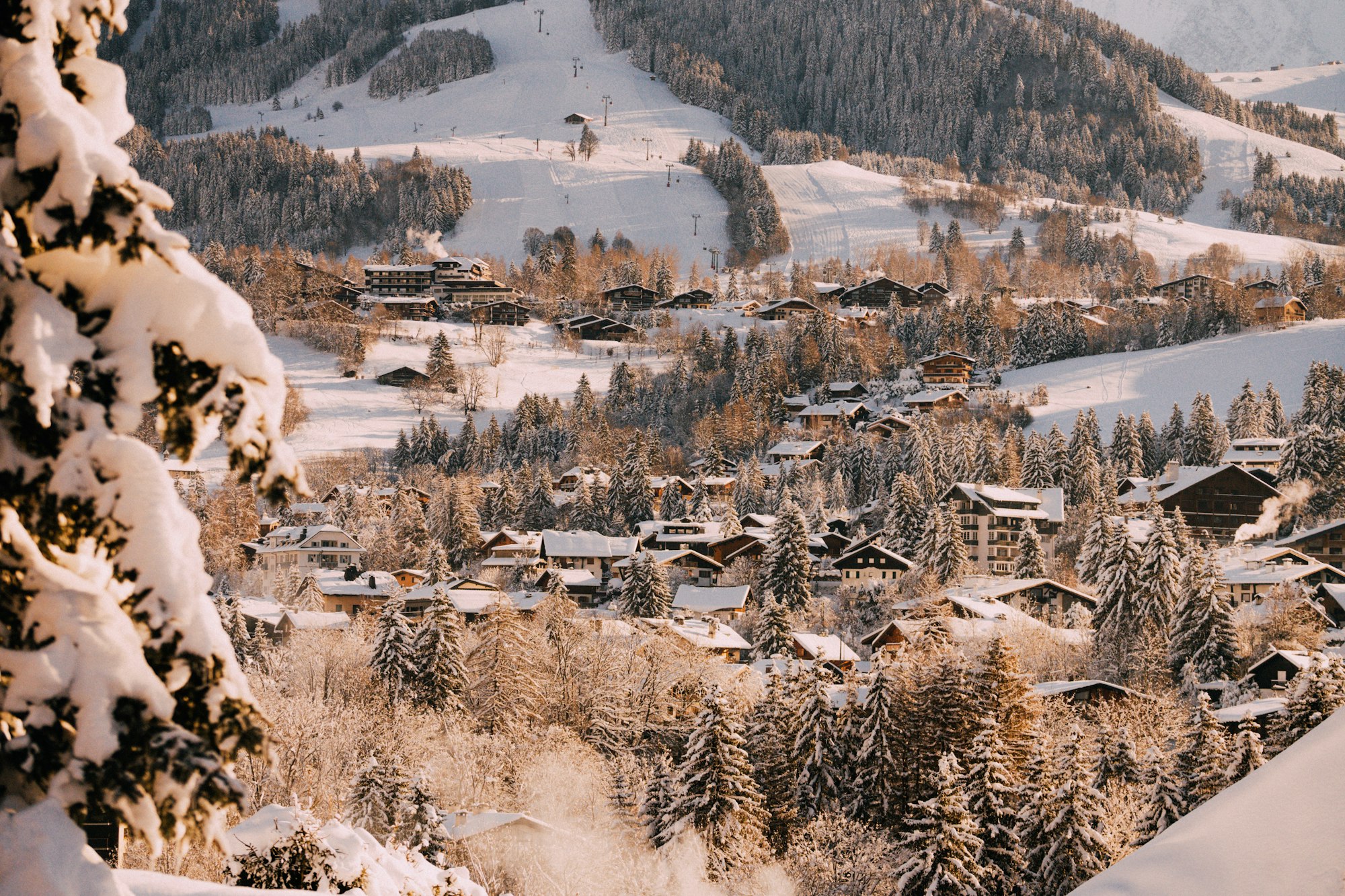
That philosophy remains visible everywhere. Unlike resorts dominated by apartment blocks or imposing hotels, Megève unfolds gradually through narrow streets lined with timber chalets, artisan bakeries, independent boutiques and small family-run businesses that seem to belong as naturally to the village as the church at its centre. The architecture is remarkably cohesive, not because strict uniformity has been imposed, but because generations have built with a shared understanding of proportion, materials and landscape. Timber ages gracefully. Stone softens beneath winter light. Even the newest buildings appear quietly respectful of what came before them.
Walking through Megève in the early evening is one of the great pleasures of any Alpine holiday. As daylight fades, warm light spills from restaurant windows onto snow-covered streets, while the sound of conversation drifts from wine bars and cafés where visitors and residents mingle with little distinction. Luxury here is not announced. It is woven into the fabric of everyday life.
The mountains surrounding Megève reflect the same understated elegance. Unlike the dramatic vertical landscapes of Zermatt or Verbier, the terrain feels softer, more pastoral and deeply connected to the agricultural heritage of the region. Wide alpine meadows give way to forests of spruce and fir before opening once again onto panoramic ridgelines overlooking Mont Blanc. The skiing is extensive, stretching across the Évasion Mont-Blanc domain, yet the landscape rarely feels overwhelming. Instead, it invites exploration at an unhurried pace, encouraging skiers to move between villages, mountain restaurants and hidden woodland descents without ever feeling compelled to chase distance for its own sake.
This is not to suggest that Megève lacks sporting credibility. Quite the opposite. The resort has produced Olympic champions and continues to attract accomplished skiers who appreciate beautifully prepared pistes and an environment that rewards technical skiing over sheer bravado. Yet there is little of the competitive atmosphere found elsewhere. Families ski together. Friends pause for coffee rather than checking their watches. Children learn in surroundings that inspire confidence rather than intimidation. The mountain seems to encourage conversation as much as progression.
Perhaps nowhere is Megève's character expressed more clearly than in its relationship with food. Haute-Savoie has always celebrated generous mountain cooking, drawing upon exceptional cheeses, cured meats and produce shaped by the rhythm of Alpine farming. In Megève, these traditions have not disappeared beneath the influence of international luxury. Instead, they have evolved. Rustic inns sit comfortably alongside Michelin-starred restaurants where local ingredients are treated with extraordinary care rather than unnecessary complication. The finest meals here often feel surprisingly simple: perfect Beaufort cheese, fresh mountain herbs, locally reared game and wines chosen not to impress but to complement.
Hospitality follows the same philosophy. Megève has never attempted to compete through spectacle. Instead, its finest hotels possess an intimacy that larger resorts often struggle to replicate. Guests are welcomed not into grand statements of architectural ambition but into beautifully considered spaces where craftsmanship matters more than scale. Timber beams, open fires, antique furniture and contemporary design coexist naturally, creating interiors that feel collected rather than curated. Many properties remain family owned, preserving a continuity of service that is increasingly rare in luxury travel. Returning guests are greeted by familiar faces, remembered preferences and the comforting sense that little has changed since their previous visit. That continuity may be Megève's greatest luxury of all.
In an industry often obsessed with novelty, Megève understands the enduring appeal of permanence. Shops evolve slowly. Restaurants refine rather than reinvent. Buildings are restored instead of replaced. Even the village's social life reflects this measured confidence. Evenings are elegant without becoming formal, lively without becoming loud. There is no pressure to be seen. Indeed, some of Europe's most recognisable families have chosen Megève precisely because it allows them to disappear into the rhythm of village life rather than perform within it.
As the final lifts close and the surrounding mountains begin to fade into shades of blue and silver, the village returns to itself. Ski boots give way to polished leather shoes, fireplaces are lit and diners gather in restaurants where conversation often continues long after dessert has been cleared. Outside, fresh snow settles quietly across rooftops that have witnessed generations of Alpine winters. There is no urgency here. Tomorrow's mountain will still be waiting.
That unhurried confidence explains why Megève occupies such a distinctive place within the Alps. It has never sought to become the biggest resort, the highest resort or even the most fashionable. Instead, it has remained steadfastly committed to something much harder to achieve: preserving the qualities that made it special in the first place.
In an age when many luxury destinations strive constantly to reinvent themselves, Megève offers a gentler proposition. It suggests that refinement need not be loud, that authenticity becomes more valuable with time and that the finest places are often those secure enough to resist unnecessary change. For travellers who believe that a great ski holiday should extend beyond the mountain, there are few villages that feel quite so complete.
From Inside Oxford Ski Company’s Little Black Book
Don't missAn early morning walk through the Place de l'Église before the village awakens; lunch at a traditional mountain restaurant overlooking Mont Blanc; browsing Megève's independent boutiques in the late afternoon; an evening carriage ride through the historic centre; and lingering over dinner rather than hurrying back to your hotel.
Three-day strategySpend your first day exploring the skiing immediately above the village, your second venturing across the wider Évasion Mont-Blanc area, and your third embracing Megève itself — its cafés, galleries, food and atmosphere deserve as much attention as its pistes.
The Oxford Ski Verdict
Megève is not defined by the size of its ski area or the drama of its mountains. Its greatness lies in something rarer: the preservation of a genuine Alpine village that has evolved into one of Europe's most refined winter destinations without losing its soul. It is a place where skiing forms part of a richer way of life, and where the quiet pleasures of good food, thoughtful hospitality and timeless surroundings are valued just as highly as the perfect day's snow.
Properties in Megève
Featured Chalets and Hotels
Experience Megève
Speak with our specialists to begin planning your winter in Megève.