Courchevel · France
The World's Most Complete Winter Resort
45° 14' 12" N·6° 38' 08" E
It is not merely one of the world's finest ski resorts; it is the place against which the very idea of a luxury winter holiday continues to be measured.

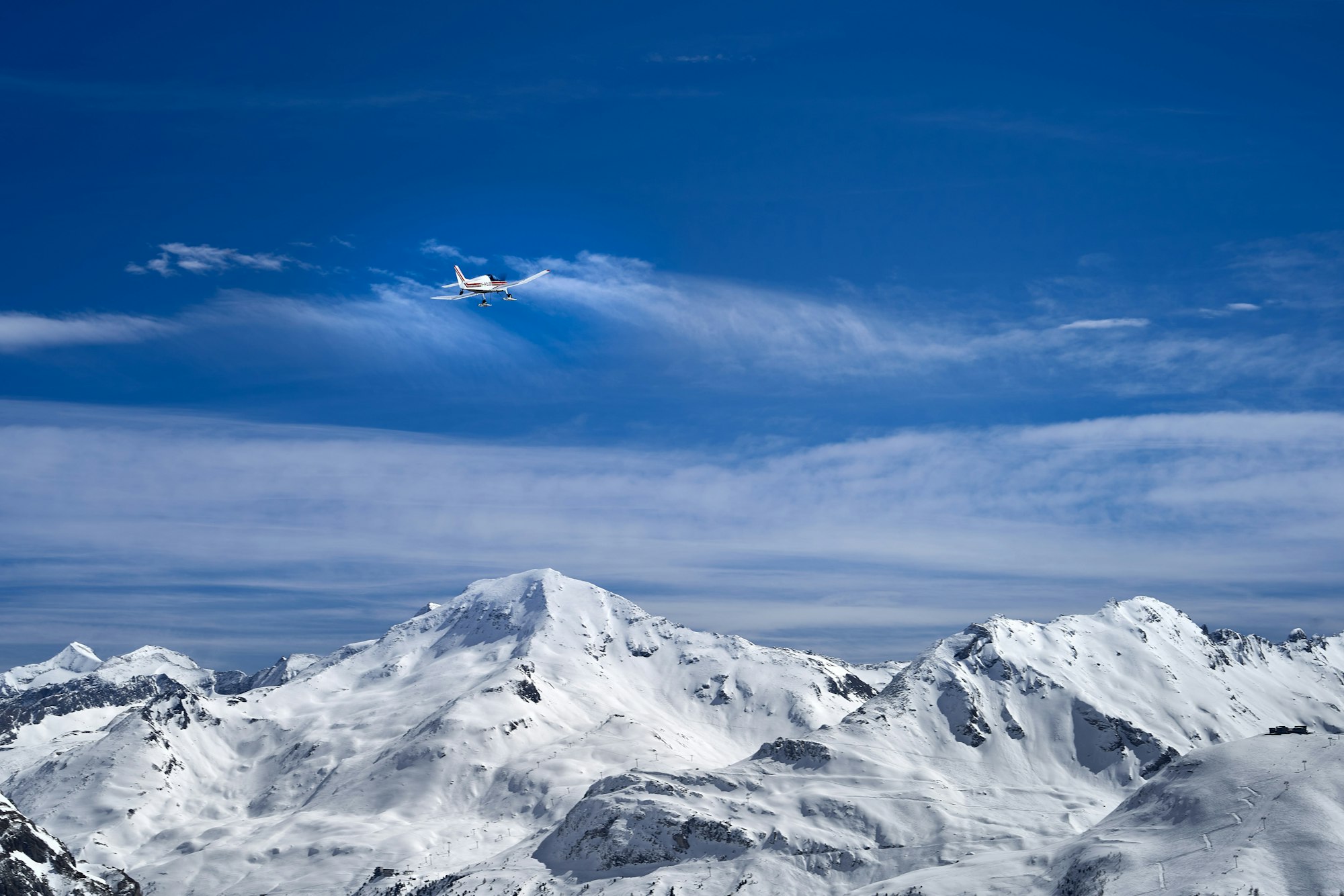
There is a moment each winter morning, just before eight o'clock, when Courchevel still belongs to the people who make it work. The village has begun to stir, but only just. Outside the grand hotels on the Croisette, porters quietly unload skis from waiting vehicles while delivery vans reverse discreetly into service entrances that most guests will never notice. Fresh bread is carried across snow-covered pavements from boulangeries that have been awake for hours. High above the resort, lift engineers complete their final inspections before the first gondolas begin their steady climb towards Verdons and Saulire. The pistes, groomed through the night by machines whose operators know every contour of the mountain by instinct, lie untouched beneath a pale wash of early light. It is an hour largely unseen by visitors, yet it reveals something essential about Courchevel. Before the boutiques open, before the terraces fill, before the helicopters begin tracing their paths across the Tarentaise sky, the resort presents itself not as a symbol of wealth but as an extraordinary exercise in preparation.
Much has been written about Courchevel's luxury, often by people who seem more interested in price tags than places. Newspapers return each winter to familiar stories of lavish chalets, celebrity visitors and the economics of Alpine real estate, creating the impression that the resort's defining characteristic is excess. It is an easy narrative, but an incomplete one. Luxury may be highly visible here, yet it is not the reason Courchevel occupies such a singular position in the imagination of skiers. Long before it became shorthand for exclusivity, it was admired for something much more difficult to achieve. It was simply the best organised ski resort anyone had ever built.
That distinction is worth dwelling upon because it explains almost everything that followed. Unlike villages that evolved gradually over centuries before adapting themselves to tourism, Courchevel emerged from a remarkably ambitious post-war vision. France was rethinking its mountain economy, and planners asked an unusually modern question: what if a resort were designed entirely around skiing rather than inherited from an existing settlement? Architects, engineers and foresters worked together to create a destination in which roads, lifts, accommodation and public spaces formed part of a coherent whole. Ski-in, ski-out access was not an accidental luxury but a guiding principle. Buildings were positioned to preserve views and maximise sunlight. Infrastructure was planned for the long term rather than added piecemeal as visitor numbers increased. Today, when almost every resort claims convenience as one of its virtues, it is easy to forget how revolutionary these ideas once were.
More than seventy years later, that original clarity of purpose remains visible. Courchevel does not merely function well; it feels intuitive. Visitors spend remarkably little time thinking about logistics because the resort has already done the thinking for them. Skis are collected before breakfast, lifts appear where they are needed, connections feel obvious and even the busiest weeks of the season rarely descend into confusion. Great hospitality often succeeds by removing friction rather than adding spectacle, and nowhere demonstrates this more convincingly than Courchevel.
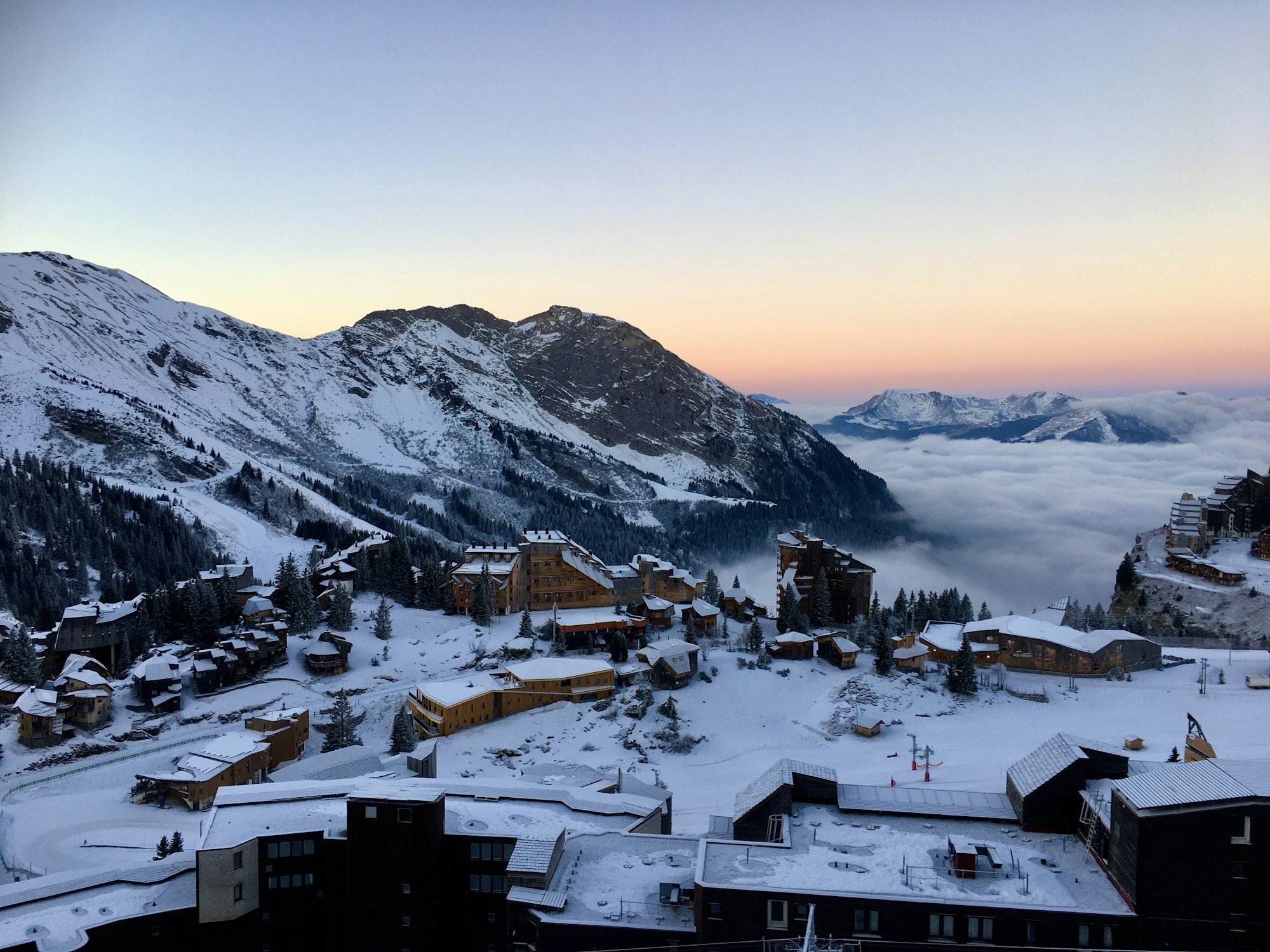
Its geography reinforces that sense of completeness. Rather than existing as a single village, Courchevel is a family of settlements, each with its own personality. Le Praz, gathered around its frozen lake beneath dark forests of spruce, retains the atmosphere of a traditional Savoyard community where stone farmhouses predate modern tourism by centuries. Moriond enjoys longer afternoon sunshine and a more relaxed rhythm, while Courchevel 1850 has evolved into one of Europe's most sophisticated winter addresses, where grand hotels, independent boutiques and Michelin-starred restaurants exist within a compact, walkable centre. Moving between them never feels like leaving one resort for another. Instead, it resembles changing chapters within the same story, each village offering a different perspective on Alpine life without sacrificing the coherence of the whole.
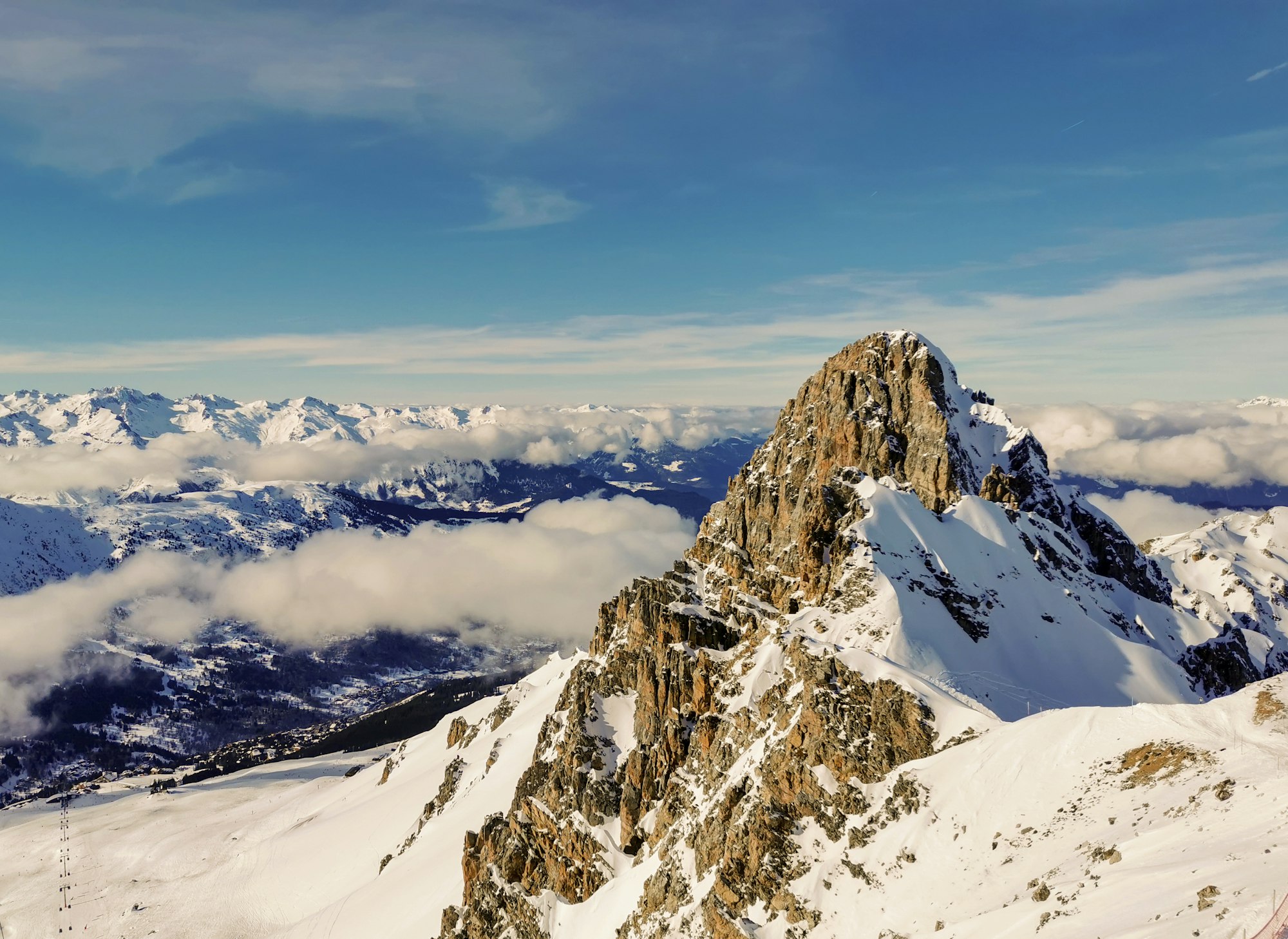
The mountain itself possesses a similarly rare balance. Standing on the summit of Saulire, one begins to understand why generations of skiers have regarded the Three Valleys less as a ski area than as an entire landscape devoted to movement. Statistics inevitably attempt to define its scale—hundreds of kilometres of pistes, countless lifts and one of the largest interconnected ski domains on earth—but numbers fail to capture the experience of skiing here. What lingers in the memory is not magnitude but freedom. Every morning presents an almost limitless series of possibilities. One skier may spend an entire day exploring Courchevel's own beautifully maintained slopes without ever feeling constrained. Another may cross into Méribel before coffee, continue towards Val Thorens for lunch and return beneath the late afternoon light having scarcely repeated a run. The remarkable achievement is not that these journeys are possible, but that they feel effortless.
For all its reputation, Courchevel never demands that guests prove themselves. Strong skiers will find challenging terrain beneath the couloirs of Saulire, while families discover broad, forgiving pistes that encourage confidence without monotony. Children encounter some of the finest ski schools in Europe, where instruction has become an art refined across generations. Beginners are introduced to the mountains gently but without condescension. There is an elegance to the progression, a quiet understanding that confidence grows not through intimidation but through enjoyment. The mountain seems designed to reward curiosity rather than bravado, inviting visitors to explore a little farther each day.
This philosophy extends beyond skiing itself. Courchevel has become one of the Alps' great culinary destinations not because it chased Michelin stars, but because excellence in hospitality naturally attracted exceptional chefs. Lunch may be served on a panoramic terrace overlooking distant peaks or beside a fire in a centuries-old mountain restaurant where Savoyard recipes remain largely unchanged. Dinner, meanwhile, ranges from intimate bistros celebrating regional produce to restaurants that have become destinations in their own right. Yet despite this extraordinary concentration of talent, the finest meals here rarely feel theatrical. Service is polished but never hurried, confidence replacing performance. The greatest luxury is not novelty but consistency, and Courchevel understands that distinction instinctively.
The same could be said of its hotels and chalets. While architecture has evolved considerably over recent decades, the most successful properties share a common characteristic: they understand that discretion is more persuasive than display. Guests remember how a concierge anticipated a request before it was made, how a favourite bottle appeared without asking, or how returning from the mountain felt less like checking into a hotel than coming home to a private residence. These details resist photography. They rarely appear in brochures. Yet they are precisely the experiences that transform a memorable holiday into one that guests repeat year after year.
Perhaps that explains why Courchevel inspires such remarkable loyalty. Visitors undoubtedly arrive because of its reputation, but they return for reasons that are considerably harder to describe. The resort has an unusual ability to remove effort from every part of a ski holiday without making that effortlessness feel engineered. Nothing appears forced. Nothing asks to be admired. Instead, every element, from the grooming of the pistes to the warmth of a hotel welcome, contributes quietly to a single impression that lingers long after the journey home.
As evening falls, the final skiers descend through forests already turning blue in the fading light. Restaurant lights begin to glow across the mountainside, while high above the valley the day's final lift swings silently towards its station. Snowcats once again emerge onto empty pistes, beginning preparations for tomorrow long before today's guests have finished dinner. The cycle repeats itself with remarkable precision, just as it has for decades.
That is the secret of Courchevel. It has never sought to be the loudest, the most fashionable or even the most luxurious resort in the Alps. Instead, it has pursued something infinitely more difficult: completeness. In doing so, it became the standard against which almost every other winter destination is measured.
From Inside Oxford Ski Company’s Little Black Book
Don't missFirst tracks from Saulire on a clear morning; lunch on a sunny mountain terrace overlooking the Three Valleys; an evening stroll through Le Praz; discovering the quieter corners of Moriond; and watching the pisteurs begin their work as the mountain closes.
Three-day strategySpend your first day exploring Courchevel itself, your second traversing the Three Valleys, and your third returning to the sectors that surprised you most. Courchevel rewards familiarity as much as discovery.
The Oxford Ski Verdict
Courchevel is not defined by glamour, wealth or prestige, although all three exist in abundance. Its true distinction lies in something far rarer: the relentless pursuit of doing everything exceptionally well. It is not merely one of the world's finest ski resorts; it is the place against which the very idea of a luxury winter holiday continues to be measured.
Properties in Courchevel
Featured Chalets and Hotels
Experience Courchevel
Speak with our specialists to begin planning your winter in Courchevel.